
Trump announces possible reduction in tariffs for India to 18%
Mohan Sinha
05 Feb 2026
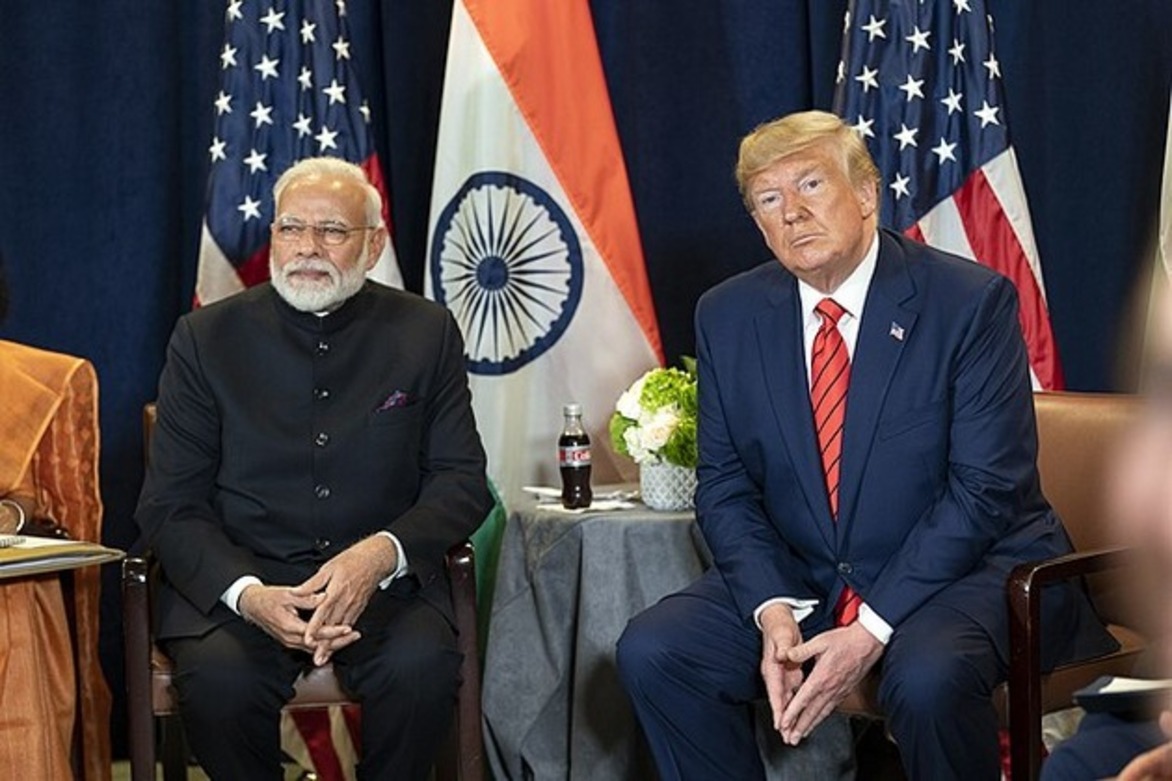
WASHINGTON, D.C./New Delhi: President Donald Trump said Monday that he plans to lower tariffs on goods from India to 18 percent, from 25 percent, and also claimed that Indian Prime Minister Narendra Modi agreed to stop buying Russian oil.
The move comes after months of Trump pressing India to cut its reliance on cheap Russian crude. India has taken advantage of reduced Russian oil prices as much of the world has sought to isolate Moscow for its February 2022 invasion of Ukraine.
In their respective posts on X, Trump stated, "It was an Honor to speak with Prime Minister Modi, of India, this morning... He agreed to stop buying Russian Oil, and to buy much more from the United States and, potentially, Venezuela. This will help END THE WAR in Ukraine"
Trump also said that India would also begin reducing its import tariffs on U.S. goods to zero and buy US$500 billion worth of American products.
Modi's post, however, was more circumspect, with no claims on stopping Russian oil or buying American goods worth $500 billion. "Wonderful to speak with my dear friend President Trump today. Delighted that Made in India products will now have a reduced tariff of 18%. Big thanks to President Trump on behalf of the 1.4 billion people of India for this wonderful announcement. When two large economies and the world's largest democracies work together, it benefits our people and unlocks immense opportunities for mutually beneficial cooperation. President Trump's leadership is vital for global peace, stability, and prosperity. India fully supports his efforts for peace."
Speaking to the Indian news channel NDTV, US Ambassador to India Sergio Gor, while discussing tariff reductions, also refused to comment when asked whether India would stop purchasing Russian oil.
Trump and Modi had shared a friendly relationship for years, but tensions grew after Trump placed tariffs on Indian goods entering the United States. In June, he announced a 25 percent tariff, saying India had not done enough to reduce its trade surplus with the U.S. or open its markets to American products. In August, he added another 25 percent import tax because India continued to buy Russian oil, bringing the total tariff rate to 50 percent.
Will India Stop Buying Russian Oil?
If India follows through on a pledge to stop purchasing Russian oil, and with the proposed tariff cuts, duties on Indian goods could drop to about 18 percent — close to the roughly 15 percent rate applied to imports from the European Union, Japan, and other countries.
Traditionally, India's ties with Russia have been driven more by defense cooperation than by energy needs. Russia supplies only a small share of India's oil but remains one of its primary sources of military equipment. However, after Russia's invasion of Ukraine, India took advantage of discounted Russian crude to boost its energy reserves, while Russia sought buyers to support its struggling economy and fund the war.
The planned tariff reduction comes shortly after India and the European Union finalized a free trade agreement. The deal would allow nearly all goods to move freely between India and the EU's 27 member states, covering products from textiles to pharmaceuticals. It would also lower steep import taxes on European wine and automobiles.
This agreement between two of the world's largest markets also signals an effort to lessen dependence on the United States after Trump's tariffs disrupted global trade patterns. Although U.S. businesses and consumers have largely absorbed the impact of these tariffs, such measures can also shrink overall trade between nations.
In recent months, India has accelerated efforts to complete several trade pacts, signing one with Oman in December and concluding negotiations on another with New Zealand.
Trump hinted at improving ties with Modi on February 2 by posting a magazine cover photo of the two leaders together on social media. When they met last February, Trump said India would begin buying more American oil and natural gas, but discussions were difficult, and the tariffs imposed in 2025 initially did little to change India's position.
The United States has been pushing for wider access to Indian markets and zero tariffs on most of its exports. India, however, has been cautious about opening up sectors such as agriculture and dairy, which support millions of livelihoods, according to Indian officials.
The announcement also comes as Trump's special envoy Steve Witkoff and his son-in-law Jared Kushner are expected to hold another round of talks with Russian and Ukrainian representatives in Abu Dhabi later this week, aiming to explore possible paths toward ending the war, according to a White House official who spoke anonymously about the planned meeting.