
Singapore backs aviation fuel push with ticket levy
Anabelle Colaco
18 Feb 2026
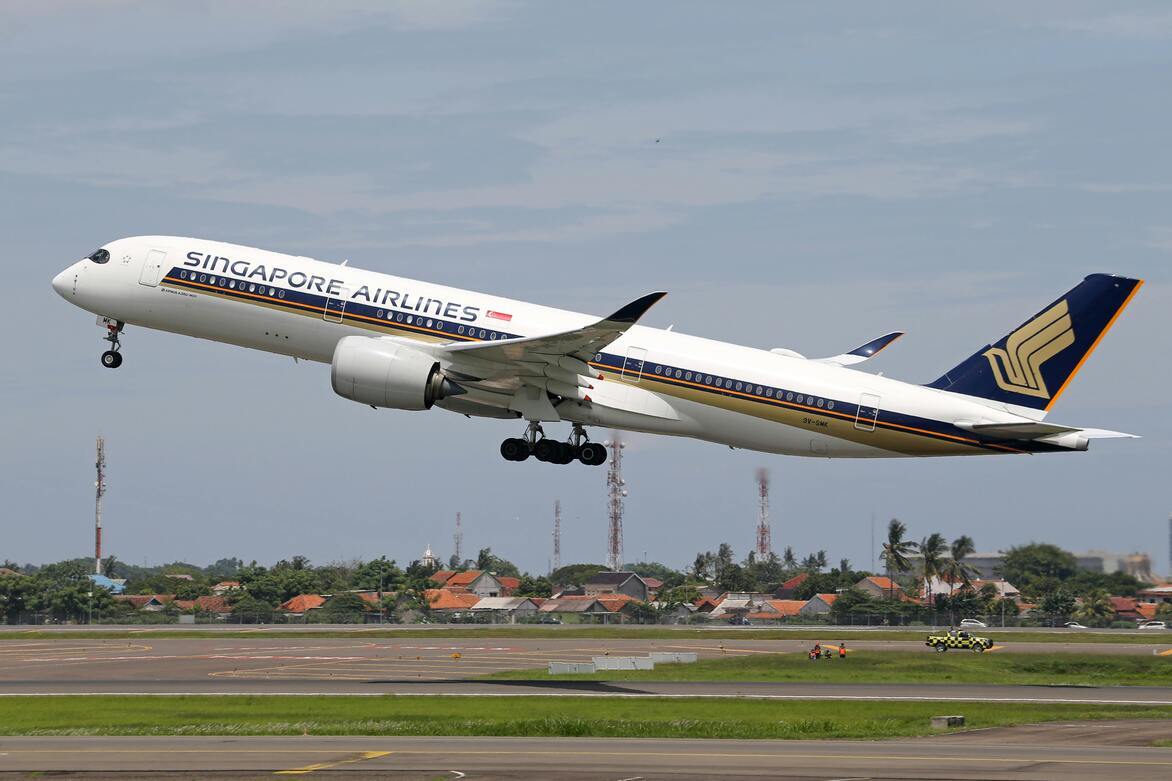
SINGAPORE: Travelers flying out of Singapore will begin paying a new levy this year as the city-state moves to fund the use of sustainable aviation fuel, positioning itself at the center of a growing Southeast Asian industry.
Starting with tickets sold after April 1 for flights departing after October 1, passengers leaving Changi International Airport will pay a surcharge ranging from 1 Singapore dollar (about 75 U.S. cents) to 41.60 Singapore dollars (about US$32), depending on distance and cabin class. The airport handled a record 70 million passengers last year.
The lowest levy applies to economy-class flights within Southeast Asia, while premium-cabin passengers traveling to the Americas pay the highest charge. Cargo shipments will also face a levy based on distance and weight. The surcharge will be clearly itemized on tickets and air cargo contracts.
The funds will support Singapore's use of sustainable aviation fuel, or SAF, which is often made from used cooking oil or agricultural waste. Airlines see SAF as a way to curb emissions without redesigning aircraft.
Daniel Ng, chief sustainability officer at the Civil Aviation Authority of Singapore, said the levy will allow "all aviation users to do their part to contribute to sustainability at a cost which is manageable for the air hub."
Singapore is already home to the region's largest SAF plant and will begin building a next-generation facility this year. Agreements are in place to supply carriers, including JetBlue and Singapore Airlines.
Elsewhere in the region, Thailand opened a new SAF plant in Bangkok in 2025, while Malaysia and Vietnam reached domestic production milestones last year. Indonesia has announced plans to expand its output, and the Philippines is streamlining regulations to attract fuel developers.
The industry is in its early stages, said Tat Chuan Goh of Chicago-based Aether Fuels, which is building Singapore's new plant. "But we do sense the momentum is clearly building up," he said.
Southeast Asia's access to agricultural and forest waste gives it strong potential, Goh added, calling it a "pot of gold that can really be scaled up."
Aung Soe Moe, a senior officer for air transport at the Association of Southeast Asian Nations, said the region could produce 8.5 million barrels of SAF per day by 2050 if development is managed responsibly. "We can, if managed responsibly, support competitive and scalable SAF production," he said.
Kelvin Lee of the International Air Transport Association said it is "natural that people are paying quite a bit of attention to SAF production in this part of the world." Still, "we do still need quite a bit of government support to have that momentum continue," he said.
Aviation accounts for about 2.5 percent of global carbon emissions, according to the International Energy Agency, and demand is rising. The International Civil Aviation Organization has set a target of net-zero emissions by 2050, estimating that SAF could cut the industry's emissions by about 65 percent.
However, global production growth is expected to slow for the first time since large-scale output began in 2018, partly due to uncertainty amid U.S. policy shifts.
Preeti Jain of IATA said the U.S. rollbacks are "definitely a topic of discussion." But "the good thing is that those policy incentives have not totally evaporated, but there is some period of uncertainty."