
Explainer: How Chinese tea drink brands are cultivating a global footprint
Xinhua
03 Mar 2026
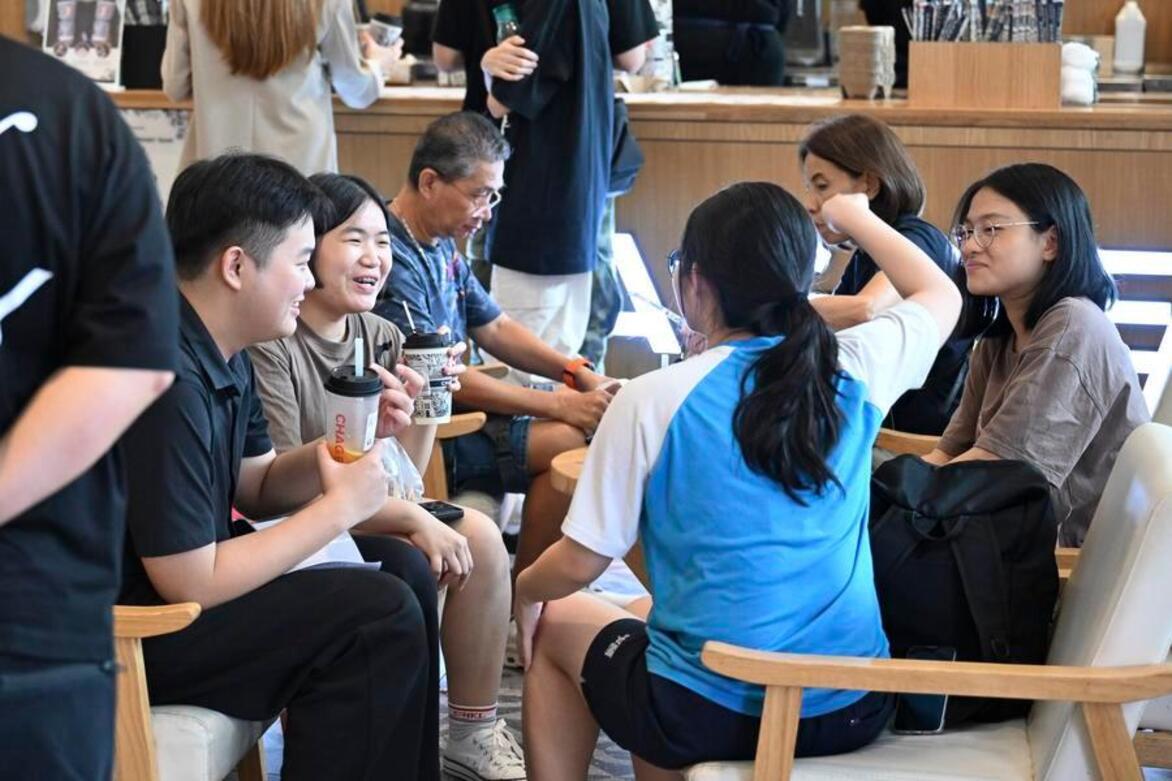
For many foreign consumers, "Chinese tea" used to mean premium, high-end products that felt distant from ordinary people. "But today's Chinese tea drink brands have completely shattered our impression of traditional Chinese tea -- they taste modern and have such a stylish feel," said Natalie, a Gen Z Thai woman.
BEIJING, March 3 (Xinhua) -- In recent years, Chinese tea beverage brands have become a more familiar sight overseas. From Kuala Lumpur to Singapore and as far as Los Angeles, Chinese milk tea and freshly brewed tea brands are establishing a presence in mainstream commercial districts, airports and university campuses.
As store networks expand and local teams grow, Chinese tea drink brands are entering a more structured and sustainable phase of international development.
Several brands have emerged as key players in this trend. Mixue Ice Cream & Tea has built one of the largest overseas networks among Chinese beverage chains, while Chagee has positioned itself around premium tea concepts and localized branding. Other major brands, including ChaPanda, Heytea and Nayuki, have also tested international waters at varying speeds and scales.
EXPANDING ABROAD
Among the fastest-growing players abroad is Mixue, which has entered 14 countries, with more than 4,700 stores operating outside China. Southeast Asia remains its core overseas market.
Mixue began its international operation in 2017 and opened its first overseas store in Vietnam in 2018. Supported by its self-built supply chain and in-house production of core ingredients, the company has replicated its cost-control model abroad.
"We are committed to ensuring that every consumer around the world can enjoy a high-quality product at an affordable price," said Bai Di, head of public affairs of Mixue Group.
Its first Los Angeles store, located near Hollywood Boulevard's TCL Chinese Theatre, offers ice cream at 1.19 U.S. dollars and bubble tea starting at 3.99 dollars, positioning itself competitively within the local market.
"This is a must-try here ... especially the brown sugar milk tea," Sheela Ganesh Acharya, a Singaporean Mixue consumer, told a reporter.
"The taste definitely stands out as well as the pricing," she said.
Chagee, meanwhile, has followed a more measured approach. After entering Malaysia in 2019, it has expanded to 196 stores in the market. In Singapore, it operates 22 outlets, including at Changi Airport and the National University of Singapore.
In Indonesia, operations have been carried out through a joint venture with a subsidiary of local retail group Erajaya, with halal certification secured to better align with local consumer expectations.
In the third quarter of 2025, Chagee achieved an overseas gross merchandise volume exceeding 300 million yuan (43.59 million U.S. dollars), representing a year-on-year increase of 75.3 percent and a quarter-on-quarter growth of 27.7 percent.
"Whenever new products are launched, there are always long lines of customers in Chagee shops," said Hazaid, area manager of Chagee Malaysia.
LOCALIZATION AND CULTURAL INTEGRATION
For many brands, localization has become central to long-term growth.
For instance, Mixue has adjusted sweetness levels, tea bases and ingredient combinations to suit local tastes. In Southeast Asia's tropical climate, the company has increased the proportion of iced beverages and incorporated tropical fruit flavors.
"Taste is the entry ticket," said Shang Xiangmin, co-founder and vice president of Chagee. "Cultural connection and integration are what sustain consumer loyalty," Shang noted Chagee's goal is to present traditional Eastern tea in a modern and accessible way.
To that end, the company has experimented with culturally themed product launches, linking drinks to national celebrations or local design elements.
In August 2025, to commemorate Singapore's National Day, Chagee introduced a new orchid-flavored beverage, the "Orchid Biluochun Milk Tea," inspired by Singapore's national flower, the Vanda Miss Joaquim.
In Malaysia, it introduced a product incorporating traditional textile element "telepuk" and collaborated with the Malaysian National Textile Museum on themed activities.
Most recently, it partnered with the Asian Civilisations Museum (ACM) and the Singapore Tourism Board to launch "Garden of Senses: A Tea Reverie," an immersive, multi-sensory tea culture exhibition. This marks a landmark collaboration, being ACM's first in-depth curatorial partnership with an international brand.
By the end of 2025, Chagee's overseas membership in the Asia-Pacific region had grown 177 percent from a year earlier, with 61 percent of members under the age of 30, demonstrating the brand's strong value recognition among local youth.
Mixue has pursued localization through its Snow King mascot. The endearing snowman, ubiquitous across Chinese cities, itself functions as a highly recognizable symbol, bridging Chinese cultural elements and connecting with overseas consumers.
The character has been promoted via multilingual animations and themed events, serving as a lighter, more culturally adaptable branding approach.
For many foreign consumers, "Chinese tea" used to mean premium, high-end products that felt distant from ordinary people. "But today's Chinese tea drink brands have completely shattered our impression of traditional Chinese tea -- they taste modern and have such a stylish feel," said Natalie, a Gen Z Thai woman.
BUILDING A WIN-WIN PATH
Beyond business expansion, Chinese tea beverage brands are also integrating social responsibility into their global strategies.
In Singapore, Chagee opened a "silent store" employing hearing-impaired staff members, complete with accessible facilities. This initiative demonstrates a commitment to inclusive employment, while offering a practical example of how brand operations can contribute to local communities.
Mixue emphasizes local hiring and talent development. In Malaysia, the brand employs over 2,900 local staff and has trained more than 4,000 personnel to date.
In addition, it is exploring local sourcing of tropical fruits such as dragon fruit and passion fruit for product development in Cambodia, linking overseas business growth with support for regional agriculture.
Health and nutrition have also become part of the social responsibility agenda. In December 2025, Chagee Malaysia received certification under the health ministry's "Healthier Dining Programme."
The assessment criteria include limits such as sugar content not exceeding five grams per 100 milliliters. The certification made Chagee the first freshly made tea brand in Malaysia to receive the designation.
To support informed consumer choices, the company also introduced a calorie calculator on its app, allowing customers to view estimated calorie information for their customized drinks before ordering.
These efforts demonstrate an approach to overseas operations that combines commercial objectives with social contributions, reflecting how Chinese tea drink brands are aiming to create mutually beneficial outcomes for themselves and local communities, said analysts.
They believe that overseas expansion is transitioning from scale expansion to quality enhancement.
Analysts praise the combination of mature supply chain capabilities, digital operations, and the trend toward health upgrades as consistently raising the profile of Chinese consumer brands.