
Focus on reopening Strait of Hormuz as UK, 35 other nations hold talks
Mohan Sinha
03 Apr 2026
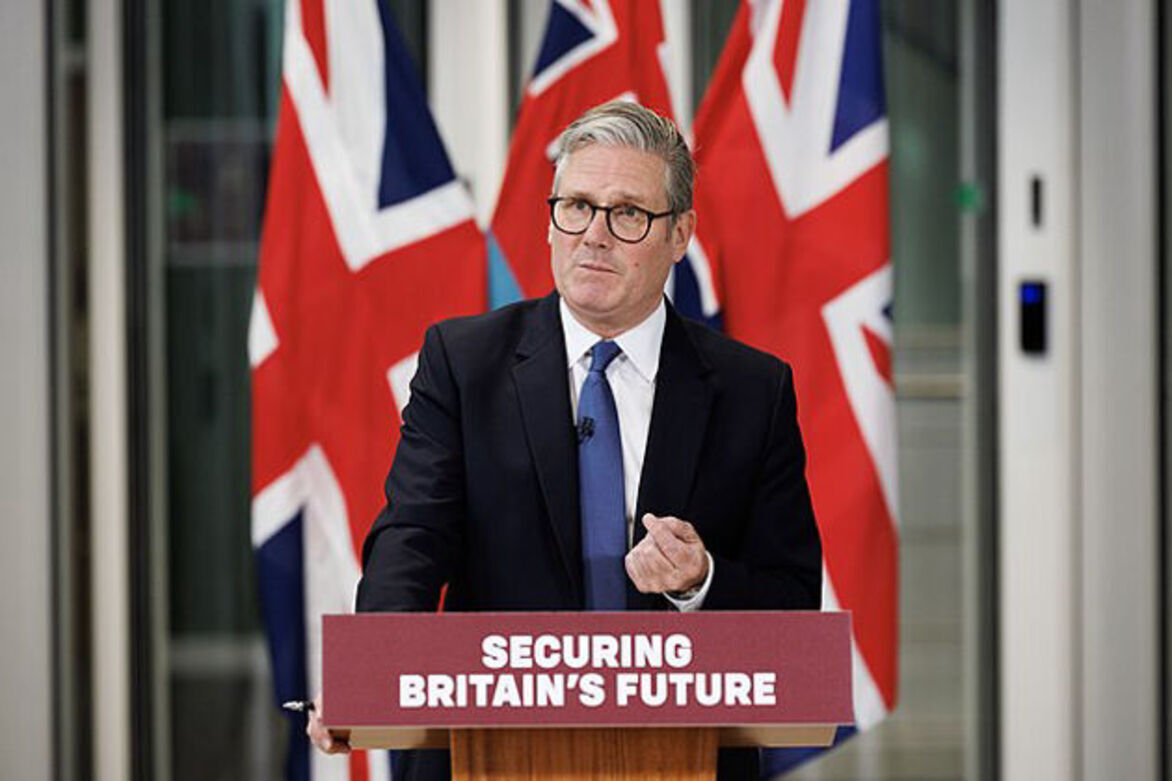
LONDON, U.K.: Almost three dozen countries met on April 2 to exert diplomatic and political pressure to reopen the Strait of Hormuz, a vital shipping route choked off by the U.S.-Israeli war against Iran.
British Prime Minister Keir Starmer said the virtual meeting chaired by Foreign Secretary Yvette Cooper "will assess all viable diplomatic and political measures we can take to restore freedom of navigation, guarantee the safety of trapped ships and seafarers, and to resume the movement of vital commodities."
Iran's attacks on commercial ships—and the risk of more—have almost completely stopped traffic in the key waterway linking the Persian Gulf to the world's oceans. This has cut off a major route for global oil supplies and pushed oil prices sharply higher.
The United States did not attend the April 2 meeting. Donald Trump said protecting the waterway is not America's responsibility and told U.S. allies to secure their own oil supplies.
No country seems ready to reopen the strait by force while the conflict continues, especially since Iran can strike ships using missiles, drones, small attack boats, and sea mines. However, U.K. Prime Minister Keir Starmer said military planners from several countries will meet soon to discuss how to protect shipping once the fighting ends.
For now, 35 countries—including the U.K., France, Germany, Italy, Canada, Japan, and the UAE—have signed a statement urging Iran to stop blocking the strait and promising to help ensure safe passage for ships.
This meeting is seen as just the beginning, with more detailed discussions planned among officials. Starmer said restarting shipping will be difficult and will require strong military coordination, diplomatic efforts, and cooperation from the shipping industry.
The plan for international cooperation is similar to the "coalition of the willing" led by the U.K. and France to support Ukraine's security after a future ceasefire. It also aims to show the Trump administration that Europe is doing more to protect itself.
Concerns about Europe's security have grown after Trump again suggested the U.S. might leave NATO. He criticized the alliance, saying it had treated the U.S. badly and could do so again, and even hinted in an interview that he might try to withdraw from it.
At the same time, in a televised address on April 1 about the Iran conflict, Trump did not mention NATO directly. Instead, he said countries that rely on oil from the Strait of Hormuz should take responsibility for securing it, as the U.S. would not.