
In Havana, Ciclobús helps carry two-wheelers amidst fuel crisis
Mohan Sinha
14 Apr 2026
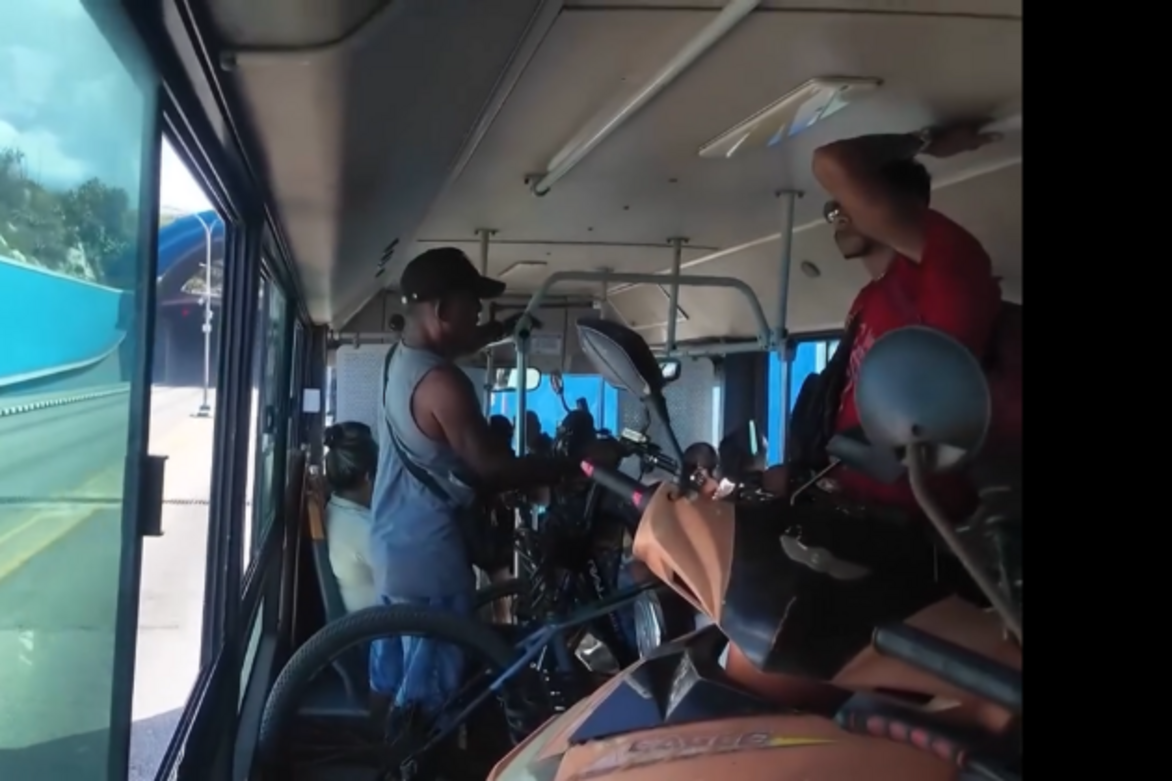
HAVANA, Cuba: Already struggling with the U.S. energy blockade, people in the Cuban capital have started packing their bicycles, scooters, and electric motorcycles onto a Ciclobús that takes them through the underwater tunnel linking Old Havana to the eastern side of the island.
The diesel-powered bus can carry about 60 people along with their vehicles, and it runs often enough to transport more than 2,000 passengers each day.
It has seats in the front, while the back half is open for carrying vehicles. People get on using a special ramp and stay on their bicycles or motorcycles during the ride, holding onto the handrails to keep their balance. Bicycles, motorcycles, and scooters are not allowed inside the tunnel itself.
Although the Ciclobús has existed for years, it has become more popular and necessary than ever as Cuba faces its worst energy crisis in decades.
The U.S. energy blockade in January has forced strict fuel limits, allowing only 20 liters (five gallons) of gasoline per vehicle through a slow appointment system that can take weeks or even months. This has badly affected public transport. Now, Havana's streets have very few cars but are full of bicycles and small electric motorcycles, which many people rely on to get around.
Ingrid Quintana, who lives in East Havana and works in the old part of the city, said she rides with her husband, who owns a bicycle. While waiting for the tunnel bus, she explained that they use the Ciclobús because there is no public transport and they cannot afford private taxis.
The Ciclobús is the shortest public transport route in Cuba, covering 1.8 miles in about 15 minutes. Passengers board near the Havana Bay Tunnel in Old Havana and travel through a dark underwater tunnel before reaching eastern Havana, a large residential area. Without the tunnel, the alternative route is a much longer 16-kilometer (10-mile) trip around the bay through poorly developed industrial areas.
The fare is very cheap, costing between two and five Cuban pesos depending on whether a person is carrying a bicycle or motorcycle. In comparison, a shared taxi ride through the tunnel costs about 1,000 pesos (around US$2), while the average monthly salary in Cuba is about 7,000 pesos (around $14).
A state-owned transport company launched the Ciclobús in the 1990s during the "Special Period," a time of crisis following the collapse of the Soviet Union. Back then, then-President Fidel Castro encouraged people to use bicycles by distributing them across the country.
Later, the service became less popular as people returned to buses and taxis. But now it is making a comeback as fuel shortages force more people to rely on bicycles, electric vehicles, and motorcycles for daily travel.
Gym teacher Bárbaro Cabral said most jobs are located in the city, so people have to use the Ciclobús to get there.