
EU downgrades growth forecast, fueling stagflation concerns
Xinhua
21 May 2026
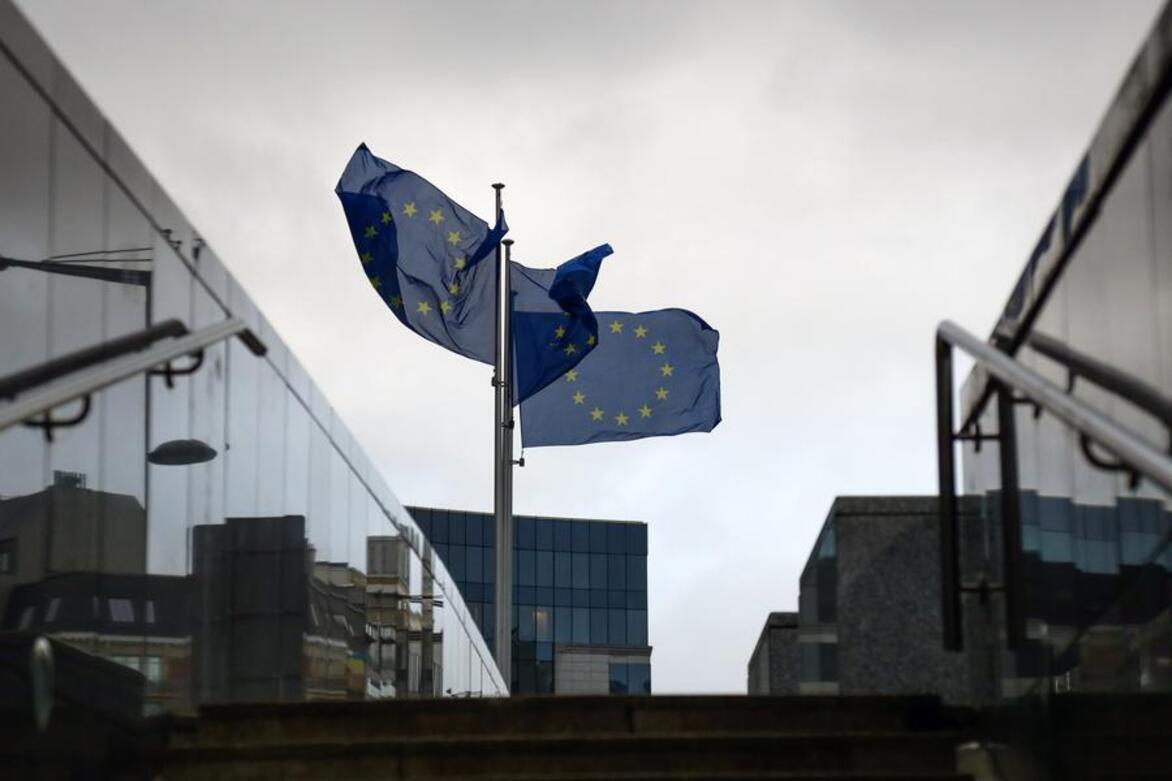
The key question now dividing policymakers and markets is whether Europe's stagflation is a transient consequence of a geopolitical shock or the emergence of a more durable "new normal."
BRUSSELS, May 21 (Xinhua) -- The European Commission lowered its 2026 growth projections and raised its inflation outlook in its spring forecast released on Thursday, warning that the Middle East conflict has brought the bloc a stagflationary shock that policymakers may lack the tools to counter.
Europe's brief post-pandemic recovery has given way to a period of stubbornly low growth and persistently high inflation -- a combination that is forcing a rethink of whether the continent faces a temporary energy spike or a lasting shift in its economic trajectory.
GROWTH DOWN, INFLATION UP
Growth in the European Union (EU) is now projected to slow to 1.1 percent in 2026, down 0.3 percentage points from the autumn forecast, while inflation is expected to hit 3.1 percent -- a full percentage point higher than previously forecast and well above the European Central Bank's (ECB's) target. The long-term decline in the EU's unemployment rate "is set to come to an end," said the spring forecast.
The revision came after the sustained closure of the Strait of Hormuz pushed oil prices above 100 U.S. dollars per barrel and disrupted supply chains.
European Commissioner for Economy Valdis Dombrovskis told CNBC that Europe is facing "a stagflationary shock," adding that governments have far less room to respond fiscally than during the pandemic.
Germany, the eurozone's largest economy and manufacturing anchor, is forecast to grow just 0.5 percent in 2026, down from an earlier 1 percent estimate. "With the flash PMI data for May signalling a second consecutive monthly decrease in business activity, the German economy is on course to contract in the second quarter of the year," said Phil Smith, economics associate director at S&P Global Market Intelligence.
Meanwhile, in the first quarter (Q1) of 2026, France, the bloc's services-and-consumption engine, recorded zero growth quarter on quarter. Household consumption contracted and exports plunged, and the country's 10-year bond yield hit the highest level since June 2009 on May 15, signaling growing concerns about fiscal strain.
"As French bonds are a eurozone benchmark, higher yields spill over, pushing up borrowing costs across the region," Achille Agbe, director of France's Silk Road Business School, told Xinhua. He also warned that wider spreads could rattle the eurozone and global bond markets.
French daily Le Monde noted that weaker consumption, falling investment and declining exports all point to a lack of momentum, warning that if the energy shock persists, growth in Q2 and Q3 could even slip into contraction.
Across the Channel, Britain is showing similar strains. Data released on Tuesday show that Britain's unemployment rate rose to 5 percent in Q1. Its job vacancies from February to April also dropped to the lowest level since early 2021.
Though Britain's April inflation slowed to 2.8 percent, Suren Thiru, economies director at the Institute of Chartered Accountants in England and Wales, cautioned that it is likely "the final fall in inflation this year."
The Bank of England has warned that prolonged energy shocks could start feeding into broader wage demands and business pricing, making inflation harder to bring down even as growth weakens.
S&P Global's PMI data released Thursday showed euro area business activity contracting for a second straight month in May, with the composite PMI falling to its lowest level in 31 months.
In March, the ECB's projections described the energy price surge as "temporary" and set to reverse in Q2. However, the EU's spring forecast now points to energy prices staying elevated through 2027.
BLIP OR "NEW NORMAL"
The key question now dividing policymakers and markets is whether Europe's stagflation is a transient consequence of a geopolitical shock or the emergence of a more durable "new normal."
ECB President Christine Lagarde has rejected "stagflation" as a "flashy term" for today. In late April, she said the current eurozone economy is "completely different" from the 1970s, when inflation ran at a "sustainable and solid pace" with high unemployment and a different policy framework.
However, the ECB's own "severe scenario," published in March, describes a textbook stagflationary outcome. It assumes oil prices peaking at 145 U.S. dollars per barrel and gas at about 123 U.S. dollars per megawatt hour (MWh), leading to inflation of 4.4 percent in 2026 and 4.8 percent in 2027. This has led some analysts to argue that such levels would force the ECB to raise rates even as growth slows, mirroring the 1970s playbook.
Financial markets have already begun adjusting to the prospect of a more prolonged inflation fight. Euro swap rates have risen sharply, and markets are now pricing in the possibility of ECB rate hikes later this year -- a reversal of expectations from early 2026, when cuts were widely anticipated.
Rabobank in the Netherlands and France's BNP Paribas both foresee no quick return to pre-conflict normalcy. Rabobank projects eurozone inflation at 3.1 percent in 2026 and 2.5 percent in 2027, with growth below 1 percent in both years. BNP Paribas expects the bloc's GDP growth to slow to 1.0 percent in 2026 while inflation rebounds to 3.0 percent and 3.3 percent in 2027.
"The window for a milder scenario, in which the Strait opens and energy flows resume faster, is essentially closed," the Dutch bank warned, pointing to risks of de-industrialization and widening credit spreads.
"April was a month in which markets moved from hoping that the inflation shock would be temporary to accepting that policy may need to stay tighter for longer," wrote the Mumbai-based Sanctum Wealth Management on its website, adding that global growth momentum has been lost with Europe at the forefront of this decline.
The International Monetary Fund Managing Director Kristalina Georgieva warned in April that the Iran war will "permanently scar the global economy" through infrastructure damage, supply disruptions and loss of confidence -- even if a durable peace deal is reached.