
"Must move beyond limited engagement": Former diplomat Amarendra Khatua calls to build processing hubs, storage in Latin America
ANI
24 Jun 2026
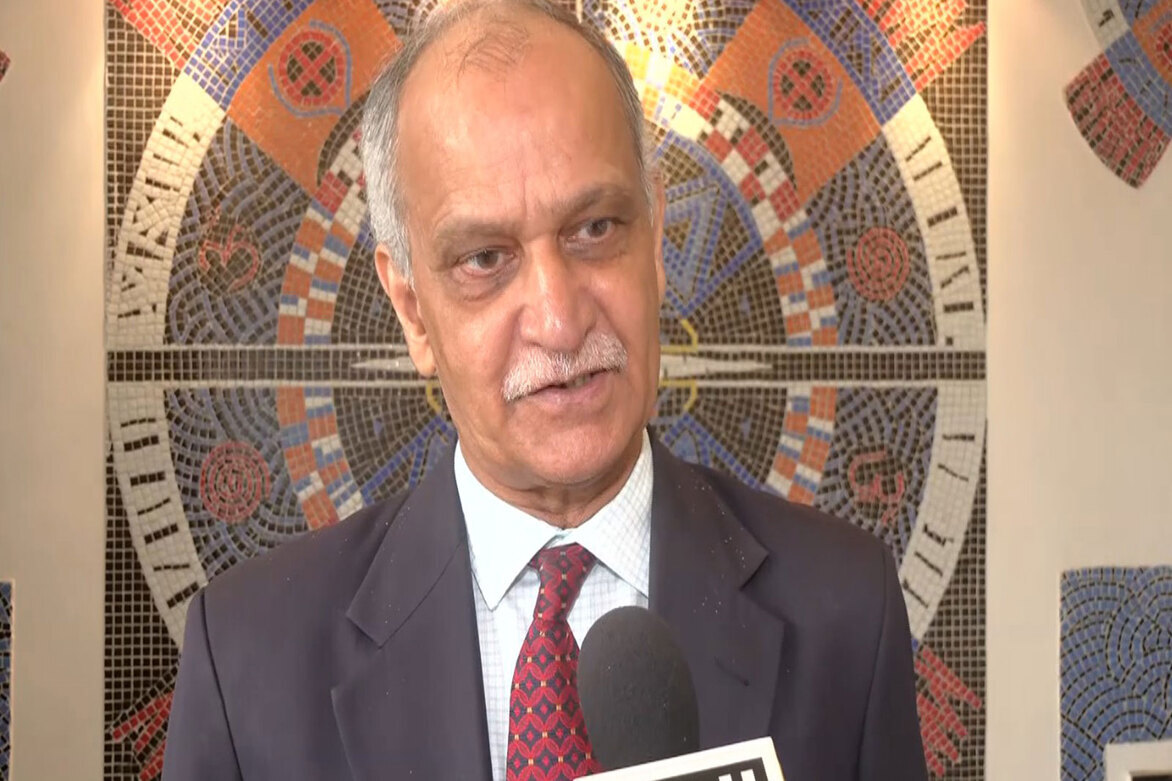
New Delhi [India], June 24 (ANI): Former diplomat Amarendra Khatua on Wednesday highlighted that India must transition from a passive trade partner to an active economic stakeholder in Latin America to secure its long-term food and energy security.
Speaking to ANI, the veteran diplomat called for a radical shift toward establishing processing hubs, localised supply chains, and permanent storage facilities in the region, in a strategic blueprint for deepening ties, mirroring the robust, interventionist model long employed by China.
Ambassador Khatua argued that India's current trade relationship with Latin America remains 'very limited,' often stalling once initial procurement goals, such as imports of edible oil, crude oil, or spices, are met. He suggested that India's economic diplomacy is currently too reactive and lacks the necessary depth to insulate the nation from global supply shocks.
'When you are buying oil and processing the oil and sending the petroleum products to them, you think about what you can produce there and export to other countries,' Khatua explained. He proposed that India move beyond mere extraction, arguing: 'Why cannot we process oil seeds there and have our exports brought to India and third countries?'
Khatua emphasised that Latin America is central to India's future stability in three vital areas, with long-standing dependencies on Brazil and Argentina, India should establish local processing capabilities to stabilize supply; by investing in refining infrastructure in countries like Venezuela, Mexico, and Brazil, India could process crude locally and create an export corridor that serves both domestic needs and markets in the Middle East and in the 'lithium triangle' of Bolivia and Chile, as well as in Peru and Brazil for rare earths, Khatua urged India to 'intervene directly.'
He advocated for building stock and sales facilities locally to ensure a steady, reliable pipeline of these essential resources back to India.
'We are also lacking in oil security. First is edible oil security. We have depended on Latin America for a long time, especially Argentina and Brazil. As far as petroleum is concerned, we import from Venezuela, Mexico and Brazil,' he said. He proposed India buy crude and edible oil there, refine it locally, and export both to India and the Middle East. 'Crude oil as well as edible oil, for example, because we export to the Middle East. Therefore, we can process there, bring to India and export all over the world,' he said.
Khatua stressed the need for alternate sourcing and storage to manage distance and shipment costs. 'We have to have alternate sourcing. And second is that, as I said, we can create storage facilities there. And when need comes, we can bring the oil here,' he said.
The former Ambassador drew a direct comparison to the Chinese approach, which emphasises direct state intervention and the creation of long-term trade corridors. Khatua criticised the current Indian tendency to focus on bilateral trade monitoring only during 'VVIP visits,' calling instead for a permanent institutional presence.
He urged Indian export promotion councils and chambers of commerce to stop 'talking too much that nothing is happening' and instead focus on establishing direct, sustainable contacts on the ground.
Beyond physical commodities, Khatua identified India's digital infrastructure, specifically the Unified Payments Interface (UPI), as a high-potential export for the region. He suggested that by pairing advanced IT and biotechnology exports with tangible infrastructure investments, India could create a comprehensive economic ecosystem in Latin America.
By establishing alternative sourcing and regional storage facilities, Khatua said India can effectively manage the logistical challenges of distance and shipment costs. 'We have to have alternate sourcing,' he noted. 'And we can create storage facilities there. And when the need comes, we can bring the oil here.' (ANI)