
India should begin with chip packaging, testing before advanced manufacturing: Former NITI Aayog Member
ANI
25 Jun 2026
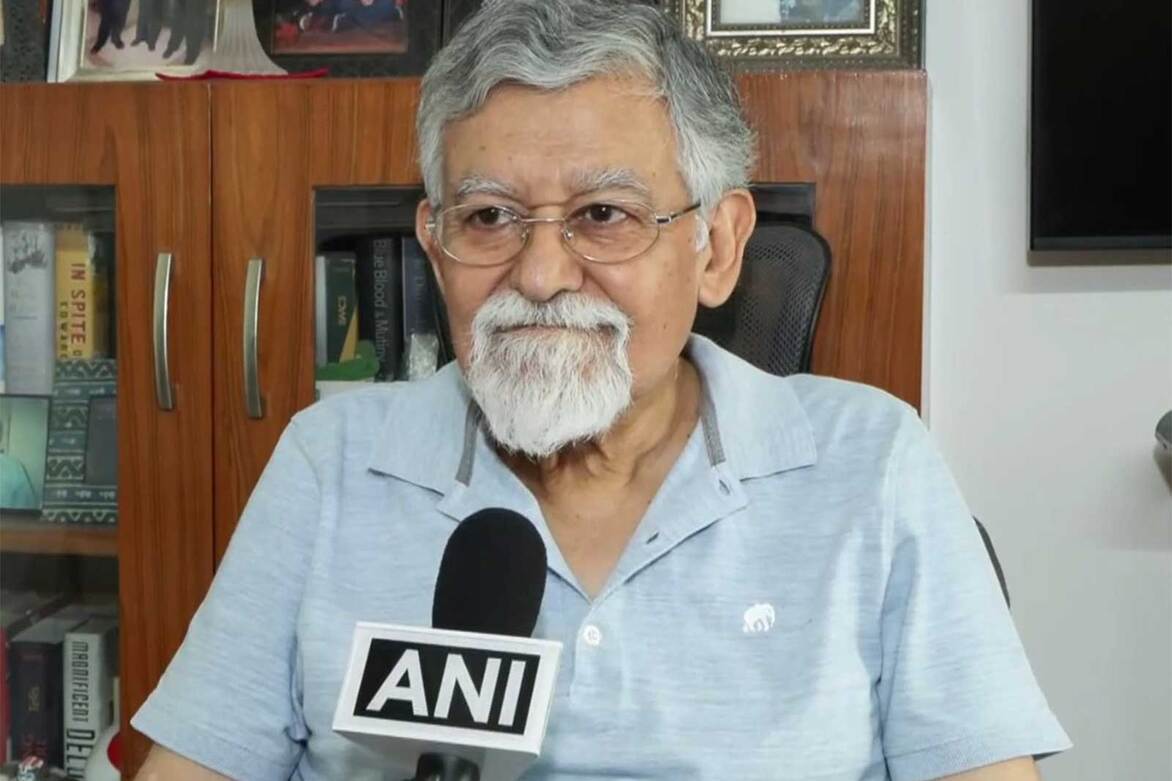
New Delhi [India], June 25 (ANI): India should begin its semiconductor journey with packaging and testing operations before moving into advanced chip manufacturing, while scale, high-quality infrastructure and a robust electronics ecosystem will be critical to the sector's long-term success, according to former NITI Aayog member Arvind Virmani
'You cannot straight away start producing all kinds of semiconductors. The appropriate thing is to start with the simplest elements of the semiconductor, which include packaging and testing,' Virmani told ANI in an interview.
He said semiconductors should be viewed as part of a larger electronics ecosystem and that India must build scale and quality supply chains.
'The whole electronic supply chain depends on them,' he said, adding that a plant producing a thousand items would be 'a hundred times less efficient' than one producing a million items.
He also emphasised the need for high-quality infrastructure, saying, 'Water, air, everything must be perfect to get good semiconductors.'
On manufacturing, Virmani said the sector should be treated as a growth driver rather than judged solely by its share in Gross Domestic Product (GDP).
'The share may not go up that much because share is not important. It's the drive which it promotes, which gives you growth,' he said.
He identified tax administration as a major reform priority. 'The need of our economy is not to keep on raising more and more revenues. It is to make the system very simple and predictable for the manufacturing sector,' he said, advocating the use of artificial intelligence (AI) to simplify tax systems and compliance.
Virmani also highlighted the role of state governments in attracting investment. 'The states which welcome genuinely welcome manufacturing and facilitate it do much better,' he said, citing the importance of land, infrastructure and connectivity.
On trade policy, he described the proposed India-European Union (EU) Free Trade Agreement (FTA) as the most important pending deal for India's manufacturing ambitions.
'The EU FTA for this year and next year is the most important,' he said, arguing that FTAs help create trusted supply chains in addition to boosting trade. According to him, the US and EU remain the most important markets for expanding manufacturing exports.
Addressing critical minerals, Virmani said India should secure supplies through domestic exploration and partnerships with resource-rich countries.
'The best way is to have deals with countries in Latin America, countries in Africa and other areas of the world, including Central Asia,' he said.
He added that partnerships with countries such as Japan could help India acquire environmentally sustainable processing technologies.
In the pharmaceutical sector, Virmani supported stronger innovation incentives. 'The PLI, I think, is very important for API, but what I think is still missing is the incentive for R&D,' he said, while also calling for faster drug trial processes.
On sustaining growth above 7 per cent, Virmani called for deeper structural reforms. 'EODB is like a jungle, you have to keep hacking away at it,' he said.
He also stressed the need to improve learning outcomes and job skills, noting that '50 per cent of the children at the end of primary school cannot read.'
Virmani further underscored the importance of urban public infrastructure. 'You are not going to be called a developed country by anybody unless your basic urban infrastructure is good,' he said.
On satellite communications and digital markets, he argued that India should support national champions capable of competing with large global players.
'The answer to global monopolies is not just domestic competition... but to build national champions,' he said.
Commenting on the Iran-US situation, Virmani said a lasting peace agreement would benefit India by lowering energy costs. 'An oil price rise is like a tax on India by the foreign producers of oil,' he said.
He added that greater regional stability would also strengthen connectivity projects such as Chabahar Port and improve India's access to Afghanistan and Central Asia. (ANI)