
Putin not worried by fuel shortages, to continue bombing of Ukraine
Mohan Sinha
05 Jul 2026
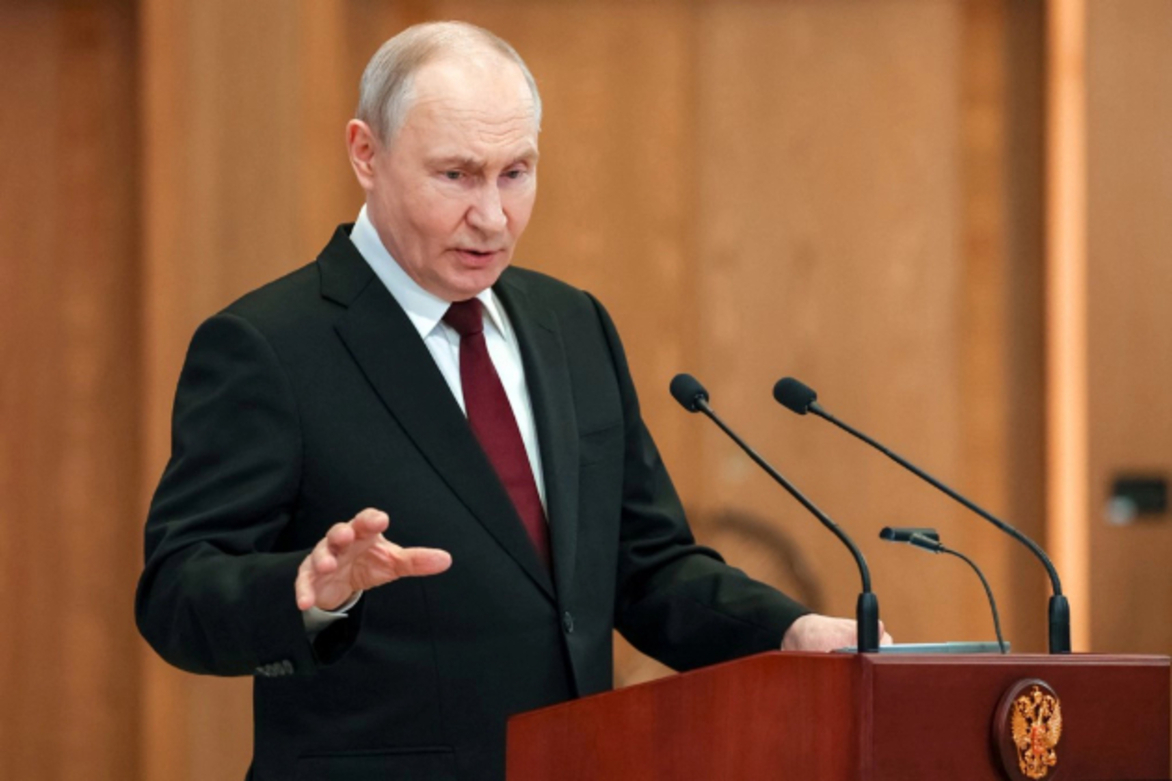
MOSCOW, Russia: Even though Russia is facing serious fuel shortages, President Vladimir Putin does not seem worried about Ukraine's growing attacks on Russian oil refineries. He has said the problem is "not critical," rejected calls for a ceasefire, and made it clear that the war will continue until his goals are achieved.
Putin has claimed that Ukraine is attacking Russia's energy sector to distract from its own losses in the war. However, experts say Russian forces have not made much progress in recent months. Putin appears confident that the fuel crisis will not weaken his power or reduce support for the war he started more than four years ago.
Meanwhile, the Russian military carried out a massive attack on Kyiv that lasted 11 hours overnight into the morning of July 2, killing at least 30 people. It was one of the deadliest strikes on the Ukrainian capital since the war began.
Since March, Ukraine has launched more than 50 attacks on oil refineries and energy sites in Russia and in occupied Crimea. Ukrainian leaders say these attacks are meant to pressure Moscow to end the war.
These strikes have also made the war feel more real for many Russians, challenging Putin's claim that the conflict does not affect everyday life in Russia.
According to Chris Weafer, CEO of Macro-Advisory, about one-third of Russia's oil refining capacity has been shut down. The damage is serious and will be expensive to repair.
Even Moscow, which is heavily protected by air defenses, has seen one of its main refineries hit twice. The second attack on June 18 caused a fire and damaged important equipment that may not be fixed until the end of the year.
Russia's gasoline production has dropped by about 17 percent to 850,000 barrels per day, according to government data. Fuel rationing has been introduced in many areas, and drivers often have to wait for hours to fill their tanks.
To deal with the shortage, the government has allowed the production of lower-quality gasoline with higher sulfur levels until the end of the year.
Crimea, which Russia took from Ukraine in 2014, has been hit hardest by the shortages. At times, gasoline sales to individuals there have been completely stopped.
Last weekend, Putin held a meeting with government officials to discuss the fuel situation.
In televised comments, he admitted the country is going through a "difficult period." He promised to speed up repairs and said Russia may import gasoline to cover what he called "temporary" shortages. He also said Russia would increase production of air defense systems to prevent future attacks.
Putin described Ukraine's strikes as an attempt to divide Russian society, stop Russia's military campaign, and force negotiations on terms favorable to Ukraine.
"We will not give them that chance," he said.
Although Putin claimed that Ukraine's long-range attacks have "no effect" on the battlefield, Western military experts say these strikes have disrupted Russian supply lines and slowed its advance, leading to a stalemate.
Putin insists that Russian forces are still advancing along the 1,000-kilometer front line. In a recent interview, he even mentioned specific villages and streets in Ukraine.
He responded to Ukrainian President Volodymyr Zelenskyy's offer to meet by inviting him to Moscow, which Ukraine rejected.
Putin has also turned down a ceasefire proposed by Ukraine and its Western allies, saying it would only allow Ukrainian forces time to recover.
He has made any ceasefire dependent on Ukraine withdrawing from the part of the Donetsk region it still controls, which Ukraine has refused. Putin has also said that any final peace deal must require Ukraine to give up its plan to join NATO, reduce its military, and protect the Russian language and culture.