
Heavy rain causes flooding around Tokyo, passengers stuck at Narita
Mohan Sinha
16 Aug 2026
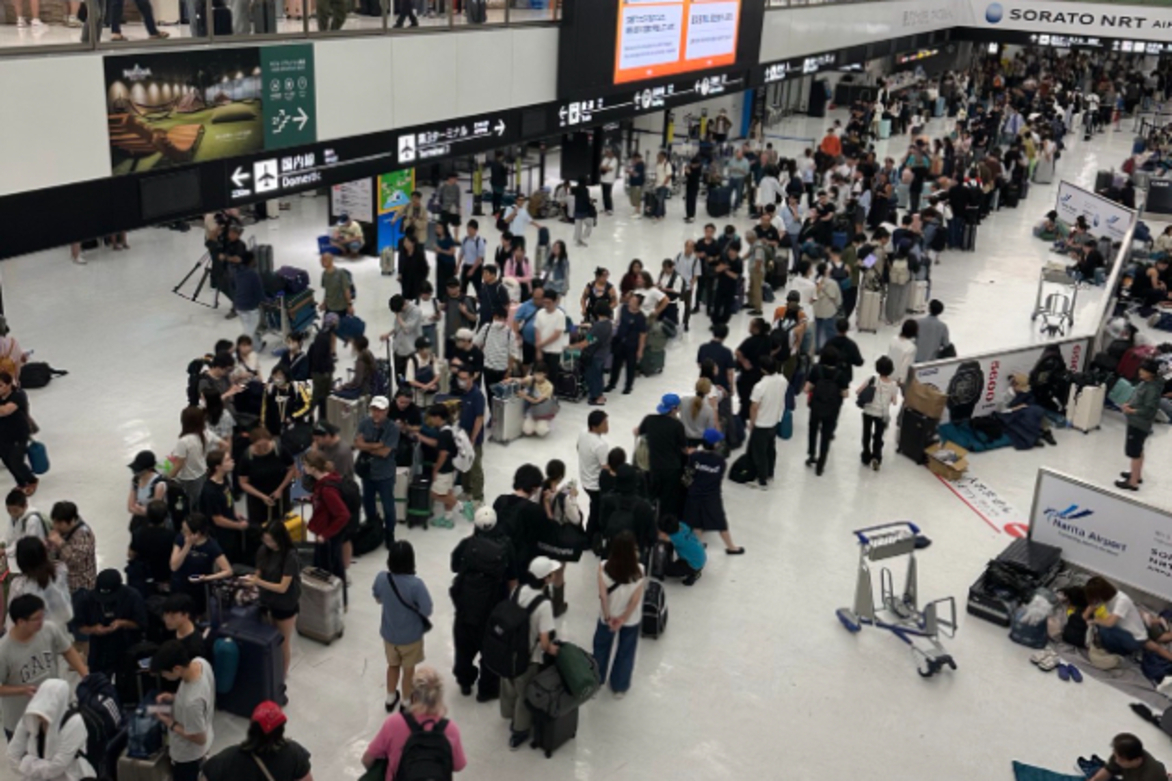
OAMISHIROSATO, Japan: Record-breaking rainfall in Japan caused severe flooding around Tokyo on August 14, leaving thousands of travelers stranded at Narita airport, disrupting transport across the region and killing at least eight people.
The flooding also caused power cuts affecting about 20,000 homes.
The heavy rain came during one of Japan's busiest holiday periods. Parts of Chiba, the prefecture next to Tokyo, received more than 360 millimeters (14 inches) of rain within 24 hours. The intense rainfall flooded roads and railway lines, while soldiers were sent to the area to support rescue and emergency operations.
Chiba Governor Toshihito Kumagai described the situation as highly unusual while speaking to reporters. "This case was an extremely unusual situation," he said. He added that he had dealt with many disasters in the past but had never experienced anything similar.
According to public broadcaster NHK, the eight people who died included a person who became trapped inside a vehicle that was submerged by floodwater. NHK cited information from Chiba authorities and police.
The flooding also caused major problems at Narita International Airport. Airport workers handed out sleeping bags, drinking water and snacks to hundreds of passengers who were unable to leave the airport because of transport problems.
Many passengers had already spent the night at the airport on August 13 after transport services were disrupted. The disruption left around 7,000 people stranded and created widespread confusion around the airport.
Minoru Yamasaki, a 48-year-old resident of Chiba, was among those affected. He had been returning from a holiday and tried to find a taxi after becoming stranded. He had also booked a hotel, but it later told him it could not accommodate him.
"I queued for a taxi, but the wait was four hours," Yamasaki said. With no other place to stay, he eventually returned to the airport.
An airport spokesperson said most flights were expected to operate normally on August 14, despite the disruption caused by the extreme weather.
The flooding also caused widespread power and gas problems. More than 20,000 homes were without electricity during the early hours of August 14 after floodwater entered a power substation, according to utility company Tokyo Electric Power. Gas supplies to nearly 13,000 customers were also temporarily stopped.
Chiba city was among the areas hit hardest by the flooding. Hundreds of people were forced to spend the night at temporary evacuation centers set up inside government buildings. Many of them slept under emergency foil blankets while waiting for conditions to improve.
Transport across Chiba was also badly affected. Several major highways were closed, forcing drivers to use alternative roads. NEXCO East, which operates the highways, said the changes caused heavy traffic and long delays.
Several railway services were also suspended on August 14 due to flooding and damage. However, some train services between Narita and Tokyo resumed, helping reduce pressure at the international transport hub.
Japan's weather authorities said the rainfall in Chiba had broken a previous record by a significant margin. The area received 367 millimeters (14.5 inches) of rain in 24 hours.
The previous 24-hour rainfall record for the area was 309 millimeters (12.17 inches), recorded in October 2013. The latest total therefore marked the heaviest 24-hour rainfall ever recorded there, adding to the scale of the emergency during the busy holiday period.