
Conflict escalates after US hits 3 Iranian tankers
Mohan Sinha
06 Sep 2026
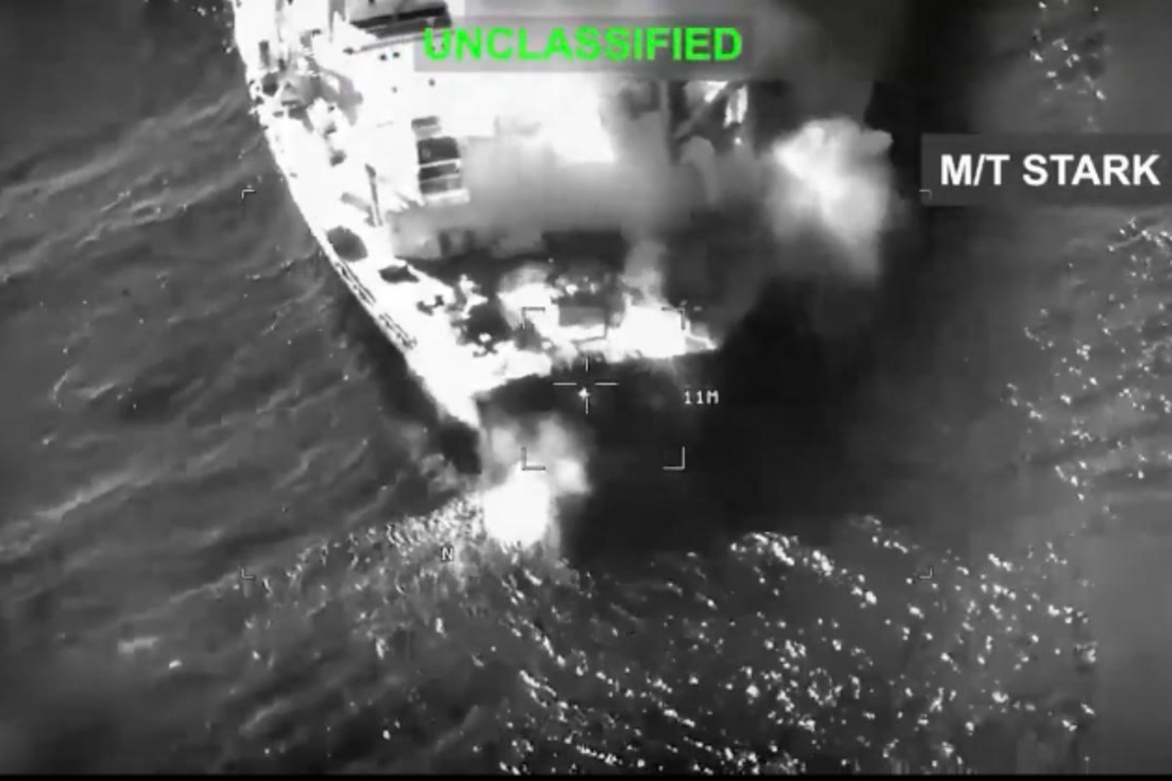
DUBAI, U.A.E.: U.S. forces attacked three Iranian oil tankers on September 5, including one near Kharg Island, a major center for Iran's oil exports, the U.S. Central Command said.
The attacks came after Iran's Islamic Revolutionary Guard Corps (IRGC) fired ballistic missiles at two US Navy ships, according to Central Command. The US military said the strikes on the tankers were intended to impose a high economic cost on Iran in response to the attack on American vessels.
Admiral Brad Cooper, the head of U.S. Central Command, warned that Iran would face stronger economic consequences if its forces continued attacking U.S. ships. "Let the message to the IRGC be clear: If you shoot at two of our ships, we will impose an even higher economic cost — taking out three of yours," he said.
Iranian semi-official news agency Tasnim had earlier reported that four U.S. missiles struck a tanker near the anchorage at Kharg Island. Local sources told the agency that nobody was injured in the attack and that the tanker's crew was being evacuated.
Central Command said no American military personnel were injured in the latest exchange. Iranian authorities had not immediately issued an official statement about the reported U.S. attacks.
The strikes marked another serious escalation in a conflict that has continued for months. The latest exchange came after several days of increasing tensions between Washington and Tehran. The wider conflict began after the United States launched military strikes against Iran in February.
The fighting has caused major disruption to global energy supplies and has also created growing political pressure inside the United States. The conflict has faced opposition from a majority of Americans, with congressional elections due in November.
Kharg Island has become one of the most sensitive locations in the confrontation because of its importance to Iran's oil industry. Before the war, Iran sent around 90 percent of its crude oil exports through the island. Oil shipments have since been heavily disrupted following a U.S. naval blockade of Iranian oil exports that began in mid-April.
U.S. President Donald Trump had already threatened action against Kharg. On August 31, he posted a brief message on social media along with an AI-generated video claiming that the island was being destroyed. Iranian officials had previously warned that any attack on Kharg would trigger a strong response.
Trump had also said on June 11 that he wanted the United States to take control of Kharg Island. He later indicated that a planned military operation against the island was not being considered at that time. This came shortly before Tehran and Washington signed an interim agreement on June 17 aimed at ending the war.
Any further U.S. military action against Kharg could put additional pressure on Iran's already weakened economy. The island is vital to the country's ability to export oil and generate foreign currency.
The U.S. blockade was imposed after Iran effectively closed the Strait of Hormuz, one of the world's most important oil shipping routes. Before the war, the waterway carried about one-fifth of global oil supplies.
Growing military tensions have already raised concerns about future energy supplies. Brent crude futures ended Friday at US$96.28 a barrel, their highest closing price since July 24. The rise reflected fears that continued fighting in the Middle East could further disrupt global oil shipments and put additional pressure on prices.
The latest tanker strikes therefore increased the risk of a wider confrontation between the United States and Iran, while placing the global energy market under renewed pressure.