
Indias defense export story is becoming harder to ignore
RT.com
09 Sep 2026
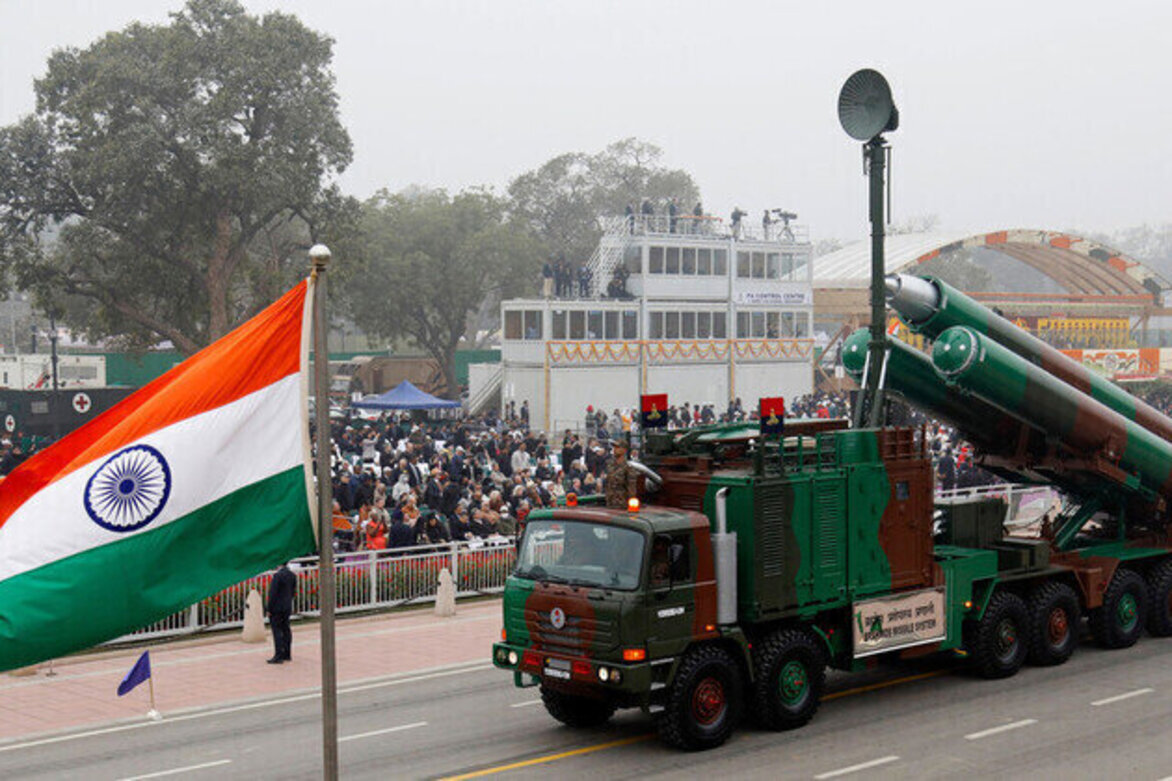
From BrahMos missiles and T-90 upgrades to aerospace parts and drones, New Delhi is turning Make in India into a serious export strategy
India saw record defense production of around $18.6 billion, with defense exports jumping by 63% to $4.6 billion in fiscal year 2025-26. Exports were driven by expanding from basic protective gear and ammunition to high-tech systems like BrahMos and Akash missiles, aero-structures, radars, and platforms. Agile private companies and start-ups contributed nearly half of all export value through components, sub-systems, and drones.
India's major exported hardware includes the BrahMos supersonic cruise missile, co-developed by India and Russia, Akash air defence systems, Pinaka multi-barrel rocket launchers, Dornier-228 utility aircraft, Advanced Light Helicopters (ALH Dhruv), Swati weapon-locating radars, Advanced Towed Artillery Gun Systems (ATAGS), naval offshore patrol vessels, fast interceptor boats, lightweight torpedoes, radar systems, avionics, and electronic subsystems.
The Philippines was the first importer of Indo-Russian BrahMos. Indonesia has moved forward with procurement interests following progressive regional agreements, and Vietnam remains in advanced discussions as a key buyer. Over a dozen nations including Malaysia, the UAE, Saudi Arabia, Egypt, Chile, and South Africa have evaluated or expressed formal interest in the BrahMos missile system.
Bulletproof jackets, specialized helmets, and various calibers of conventional ammunition and fuses are exported. Armenia is a major buyer of finished weapon systems, artillery, and multi-barrel rocket launchers. The US and France are major importers of Indian-made raw materials, aerospace sub-systems, electronics, and defense software.
It was recently reported that India is marketing its Russian-origin, battle-tested T-90 Bhishma tank upgrade package to international operators. The offering provides a cost-effective alternative to full fleet replacements, featuring advanced thermal sights, digital fire-control systems, and enhanced protection and mobility packages developed through extensive local operational experience.
T-90 manufacturing hub
The T-90 is a third-generation Russian main battle tank developed from and designed to replace the legendary T-72. The T-90 was designed and built by Uralvagonzavod in Nizhny Tagil, Russia and entered service with the Russian Army in 1992. The tank has been relied upon in major conflicts, including in Syria and Nagorno-Karabakh. Russia operates hundreds of active T-90, T-90A, and modern T-90M variants within its ground forces. Algeria has around 570 T-90SA tanks, and Azerbaijan has around 200 T-90S units. Iraq, Turkmenistan, Uganda, and Vietnam maintain small fleets.
India is the largest operator of the T-90 main battle tank. The country has so far procured an estimated 2,100 T-90s, making it likely the world's largest T-90 fleet despite Russia's wartime procurement surge. Over 1,300 of India's T-90s are heavily localized T-90S Bhisma units that serve as the core backbone of the Indian Army's heavy armored mechanized divisions.
The Indian Defense Ministry aims to scale the total fleet up to 1,805 T-90 tanks through ongoing local production and upgrades. India is inducting 464 upgraded T-90 Mk-III (T-90MS) variants featuring advanced digital fire control and thermal imaging sights. While initially imported or assembled via Russian kits, current Indian-produced T-90s feature around 80% domestic components. The tanks have been upgraded with advanced Mid Wave Thermal Image (MWIR) commander sight. On February 3, 2025, the Army released a Request for Information to identify prospective vendors for the development of an active protection system for the T-90S/SK tank fleet important for protection from tandem warheads in top-attack mode. A Counter Unmanned Aerial System (C-UAS) will add to the existing capabilities. Protection from anti-tank guided missiles, rocket-propelled grenades, and chemical and kinetic energy munitions is planned. All this without compromising mobility. The new variant tanks will feature new generation ammunition and cannon-launched missiles. Reports also suggest the use of a more efficient and powerful engine.
The Indian Army Corps of Electronics and Mechanical Engineers completed the first complete overhaul of the T-90 Bhishma. This significantly extends the series life in service with the army. Last year, the Indian government also initiated the procurement of 1350 HP engines for T-90 tanks to improve the power-to-weight ratio and increase mobility in high-altitude regions. Among the lessons from the Ukraine conflict, upgrading became important.
The upgrade positions India as an affordable, combat-proven tech and modernization provider rather than just a buyer and allows global T-90 users to modernize vintage hardware without buying new tanks, and India's broader defense export targets.
Aerospace components
India is also quickly emerging as a major global hub for aerospace manufacturing, exporting around $2 billion worth of aircraft components each year. US aerospace giants such as Boeing already source more than $1.25 billion in parts annually from a wide network of Indian suppliers. This shift is being driven not only by production backlogs in the West, but also by India's growing engineering capabilities. With factories in the US and Europe under strain, major manufacturers are being forced to diversify their supply chains.
India already manufactures major aero-structures for American aircraft, including wings for the F-16, complete fuselages for the AH-64 Apache, and crown and tail-cone structures for the CH-47 Chinook. Indian companies also produce vertical fin structures, fan cowls, and other subcomponents for the Boeing 737, as well as complex composite floor beams for the Boeing 787-9 Dreamliner. For the P-8I Neptune, they supply composite panels for power and mission equipment cabinets, along with auxiliary power unit door fairings. An Indian company also makes transport aircraft parts and structural assemblies for the global C-130 supply chain.
Sikorsky S-92 helicopter cabins are manufactured in India through a joint venture between Tata Advanced Systems Limited and Sikorsky Aircraft Corporation. Located in Hyderabad, this facility produces fully indigenous cabins and over 5,000 precision components, which are then shipped to the US for final aircraft assembly. Key domestic players like Tata Group, Dynamatic Technologies, Azad Engineering, Mahindra Aerostructures, and Jeh Aerospace build core structural components and sub-assemblies.
Manufacturing has shifted from small, simple parts to complex, multi-meter aero-structures and sub-systems processed from super-alloys and high-grade aluminum. Overall, India's aerospace components market is expected to grow from $1.5 billion to $4 billion by fiscal year 2029, at an annual rate of 28%.
The role of the private sector
In fiscal year 2025-26, India's private sector accounted for 24% of total defense production, which reached a record high of about $5 billion. Total defense exports also hit a record $4.6 billion. Of that, the private sector contributed 45%, with the remainder from well-established state-run defense manufacturers.
This growth has been driven by government policies favoring local manufacturing, larger domestic procurement budgets, and restricted import lists.
India's private defense sector includes units of major industrial conglomerates such as Tata Advanced Systems, Larsen & Toubro (L&T), Mahindra Defence Systems, Bharat Forge (Kalyani Group), and Adani Defense & Aerospace. Recently, Reliance Industries - one of India's largest private conglomerates - announced a tie-up with the UK's Rolls-Royce to manufacture aero-engines in India.
Companies such as Data Patterns and Astra Microwave produce avionics, electronic-warfare systems, and radar components, while Zen Technologies focuses on anti-drone systems and combat simulation. Solar Industries manufactures precision ammunition and military explosives, and MKU is a major supplier of ballistic protection and military electro-optical equipment, including night-vision and thermal systems.
Growth has been driven by policies that reserve 75% of the military modernization capital budget for domestic firms and by six Positive Indigenization Lists restricting imports of more than 5,500 defense items and sub-assemblies. Notably, India allows up to 74% foreign direct investment through the automatic route to encourage technology transfer.
From licensed production to Indian intellectual property
For decades, India has manufactured Russian defense equipment under license. Much of what is still produced in India is in the 'build-to-print' category, where the design - and often the raw materials - are supplied by the foreign original equipment manufacturer (OEM). In effect, India performs the manufacturing work, but control over the end use remains with the OEM. Licensed production grants only a temporary and limited right to make or sell a product; the core technology, source codes, design data, and patents remain with the foreign licensor. This means India cannot freely modify or export the product without permission.
Even in the case of BrahMos, the original design is Russian, though Indian-led improvements are now being incorporated. Because it is an independent joint venture, it offers greater flexibility, especially for exports. Similarly, the T-90 upgrades offered by India are largely based on systems developed domestically. This makes the Indo-Russian model a practical win-win. But defense technology is at the cutting edge: It takes years of research to develop, becomes obsolete quickly, and is rarely shared freely. Countries guard these types of capabilities closely. If India wants to become a genuine defense manufacturer and exporter in its own right, it must build its own design base.
This means investing far more in research and development. India currently spends just 0.6% of GDP on research and development, compared with 2.7% in China and 3.6% in the US. To build real intellectual property at home, India must move beyond assembly-line production and toward original design, software development, and domestic ownership of patents and know-how. Future contracts, joint ventures, and employment arrangements should ensure that intellectual property generated in India remains with Indian entities, rather than defaulting to foreign partners.
(RT.com)